
police report writing examples pdf
Police report writing is a crucial skill, demanding clarity and precision for legal and investigative purposes.
Effective reports document incidents, support investigations, and contribute to successful prosecutions, utilizing resources like PERF publications.
Accuracy is paramount; reports must reflect objective facts, avoiding assumptions or personal opinions.
These documents serve as official records, impacting public trust and departmental accountability, as highlighted by recent concerns regarding police conduct.
Training and adherence to best practices, such as those offered by PERF, are essential for officers to produce comprehensive and legally sound reports.
Understanding formatting guidelines and utilizing available templates ensures consistency and professionalism within the field.
Importance of Accurate Reporting
Accurate police reporting forms the bedrock of the criminal justice system, directly influencing investigations, prosecutions, and ultimately, the pursuit of justice. A meticulously crafted report ensures all pertinent details are preserved, minimizing ambiguity and potential misinterpretations. The current climate, marked by a crisis of public trust in policing – fueled by high-profile incidents – underscores the critical need for transparency and accountability, both directly supported by detailed, factual reports.
Precise documentation safeguards the rights of all parties involved, including victims, witnesses, and suspects; Errors or omissions can lead to wrongful convictions, compromised investigations, and eroded public confidence. Resources like those provided by the Police Executive Research Forum (PERF) emphasize the importance of thoroughness and objectivity. With departments facing workforce challenges and budget constraints, efficient and accurate reporting becomes even more vital, maximizing the value of officers’ time and resources.
Furthermore, well-written reports facilitate effective communication between law enforcement agencies, prosecutors, and the courts, streamlining the legal process and enhancing collaboration.
Legal and Evidentiary Value
Police reports possess significant legal and evidentiary weight, serving as foundational documents in criminal and civil proceedings. They are often the first official record of an incident, establishing a timeline and preserving crucial details for potential litigation. The accuracy and completeness of these reports directly impact their admissibility in court, influencing judicial decisions and case outcomes.
A well-documented report can be used to obtain warrants, secure convictions, and support claims of self-defense or reasonable force. Conversely, poorly written or inaccurate reports can be challenged by defense attorneys, potentially weakening the prosecution’s case and raising doubts about the officer’s credibility. PERF publications highlight the importance of adhering to established legal standards and best practices in report writing.
Given the current scrutiny surrounding policing, maintaining meticulous records is paramount for demonstrating transparency and accountability, bolstering public trust and defending against potential legal challenges.

Essential Elements of a Police Report
Core components include header details, incident specifics (who, what, when, where, why, how), and a clear, chronological narrative. PERF resources emphasize thorough documentation.
Header Information & Report Numbering
The report header is foundational, establishing context and traceability. It typically includes the agency name, report type (e.g., incident, arrest), and a unique report number—essential for referencing and retrieval. This numbering system ensures no duplication and facilitates efficient record management;
Date and time of the incident, and the report’s creation, are critical elements, often recorded in a standardized format (). Reporting officer’s name, badge number, and division are also mandatory. Location details—address, city, state—must be precise.
Clear identification of involved parties (victims, suspects, witnesses) begins in the header, with subsequent sections detailing their information. PERF publications advocate for standardized headers to promote consistency across departments. Proper header formatting streamlines information access and supports effective investigations.
Incident Details: Who, What, When, Where, Why, and How
Thorough incident details form the core of any police report, answering the fundamental questions: Who was involved? What occurred? When and where did it happen? Why did it happen (motive, if known)? And how did it unfold?
Identifying individuals requires complete names, dates of birth, addresses, and physical descriptions. The ‘What’ section details the specific offense or event, using precise language. Accurate time stamps and location data are crucial for establishing a timeline and context.
Investigative efforts should explore the ‘Why’ and ‘How’ – the circumstances leading to the incident and the sequence of events. PERF emphasizes objective reporting, avoiding speculation. Detailed answers to these questions build a solid foundation for further investigation and potential prosecution.
Narrative Section: Chronological Account


The narrative section presents a detailed, step-by-step recounting of the incident, adhering strictly to a chronological order. This section transforms raw incident details into a cohesive and understandable story, vital for investigators and legal proceedings.
Begin with the initial dispatch or officer’s arrival, then meticulously document each action and observation. Use clear, concise language, avoiding jargon and subjective interpretations. Focus on factual reporting – what was seen, heard, and done – rather than personal opinions.
PERF’s guidance stresses objectivity. The narrative should flow logically, allowing readers to reconstruct the event accurately. Include all relevant information, even seemingly minor details, as they may prove significant during follow-up investigations or court testimony. A well-written narrative is the cornerstone of a comprehensive police report.
Types of Police Reports & Examples

Various report types – incident, arrest, and supplemental – document diverse situations. PERF resources offer guidance, while online libraries provide PDF examples for practical application and understanding.
Incident Reports: Common Offenses
Incident reports meticulously detail common offenses like theft, vandalism, and simple assaults, forming the bedrock of initial investigations. These reports necessitate a clear, chronological narrative outlining the ‘who, what, when, where, why, and how’ of the event, ensuring comprehensive documentation.
PDF examples readily available online demonstrate proper formatting and content inclusion. They showcase how to accurately record victim statements, witness accounts, and any observed evidence. PERF publications emphasize the importance of objectivity, urging officers to avoid subjective interpretations or assumptions.
Effective incident reports also include detailed property descriptions, suspect information (if available), and a thorough account of any actions taken by responding officers. Utilizing standardized templates, often found as downloadable PDFs, promotes consistency and facilitates efficient information sharing between agencies. Proper report writing is vital for building strong cases and maintaining public trust.
Arrest Reports: Detailing the Arrest Process
Arrest reports comprehensively document the entire arrest process, from initial probable cause to the suspect’s transfer to custody. These reports require meticulous detail regarding the legal basis for the arrest, including specific violations of law and supporting evidence, mirroring guidance from resources like PERF.
PDF examples illustrate the necessary components: a clear timeline of events, Miranda rights advisement confirmation, and a detailed description of any resistance encountered during the arrest. Accurate documentation of use-of-force incidents is paramount, adhering to departmental policies and legal standards.
Effective arrest reports also include information about seized property, vehicle impoundment details, and any medical attention provided to the suspect. Utilizing standardized report forms, often available as downloadable PDFs, ensures consistency and facilitates legal review. Thoroughness and accuracy are crucial for withstanding legal scrutiny.
Supplemental Reports: Follow-up Investigations
Supplemental reports document further investigative actions taken after the initial incident report, providing a continuous record of the case’s progression. These reports detail follow-up interviews with witnesses and suspects, evidence analysis results, and any new information discovered during the investigation, aligning with best practices outlined by organizations like PERF.
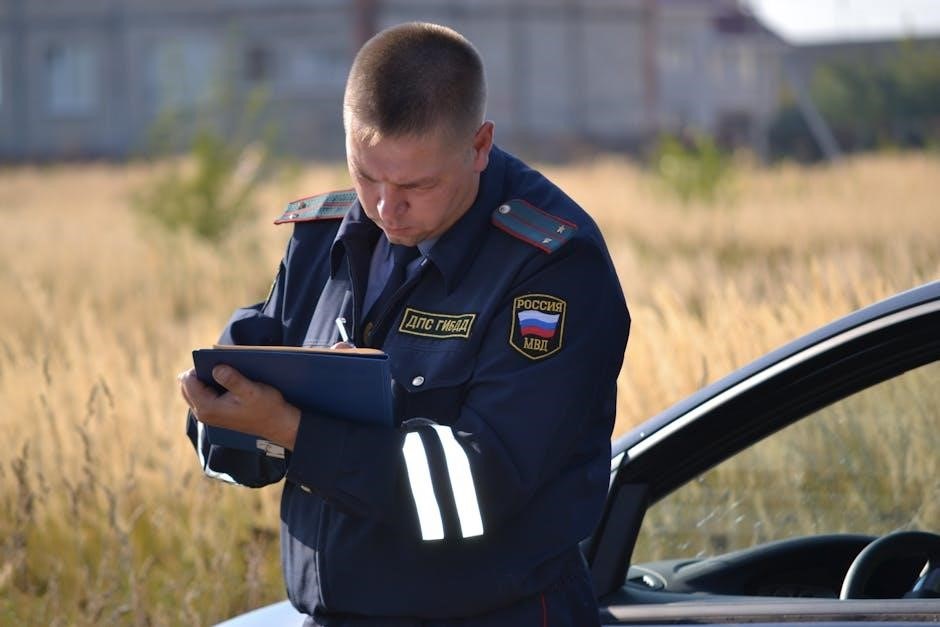
PDF examples demonstrate the inclusion of detailed timelines, updated suspect information, and documentation of search warrants executed. They also showcase how new leads are pursued and documented, including surveillance logs and financial records analysis.
Crucially, supplemental reports must clearly link back to the original incident report, referencing its report number and date. They should present findings objectively, avoiding speculation, and contribute to a comprehensive understanding of the case. Utilizing standardized templates, often available as PDFs, ensures consistency and clarity throughout the investigative process.

Formatting and Style Guidelines
Consistent formatting, clear language, and objectivity are vital in police reports, as demonstrated in PDF examples.
Adhering to these guidelines ensures professionalism and facilitates efficient information dissemination for investigations.
Objectivity and Impartiality
Maintaining objectivity is paramount in police report writing; reports must present facts without personal bias or subjective interpretation. This principle ensures the integrity of the investigation and the fairness of the legal process. PDF examples of well-written reports consistently demonstrate this through neutral language and a focus on observable evidence.
Avoid using emotionally charged words or phrasing that could indicate a preconceived notion about the incident or individuals involved. Statements should be based on direct observations, verified information, and documented evidence, not assumptions or opinions. Impartiality extends to all parties – victims, witnesses, and suspects – ensuring each is represented fairly and accurately.
Reports should detail what happened, not what the officer believes happened. Utilizing direct quotes from witnesses and suspects, accurately transcribed, reinforces objectivity. PERF publications emphasize the importance of this principle, highlighting its impact on public trust and the credibility of law enforcement.
Use of Clear and Concise Language
Clarity and conciseness are vital in police report writing, ensuring accurate communication and minimizing potential misinterpretations. Reports should be easily understood by all readers, including officers, prosecutors, and potentially, members of the public. PDF examples of effective reports demonstrate this through straightforward sentence structure and precise word choice.
Avoid using overly complex language, jargon, or slang that may not be universally understood. Sentences should be short and direct, focusing on conveying essential information efficiently. Eliminate unnecessary words and phrases, prioritizing brevity without sacrificing detail. Active voice is generally preferred over passive voice for greater clarity.

Precise language is crucial when describing events, individuals, and evidence. Ambiguity can lead to confusion and hinder investigations. PERF resources advocate for plain language principles, emphasizing the importance of accessible and understandable reports for all stakeholders involved in the justice system.
Avoiding Jargon and Slang
Police report writing demands professional language, strictly avoiding jargon and slang. While officers may routinely use specific terminology internally, reports must be accessible to a broader audience – including legal professionals, judges, and the public. PDF examples of well-written reports consistently demonstrate this principle through universally understood phrasing.
Jargon, or specialized terminology, can create confusion and impede comprehension. Slang, being informal and context-dependent, introduces ambiguity and undermines the report’s credibility. Opt for plain language equivalents whenever possible. For instance, instead of “suspect fled on foot,” write “the suspect ran away.”
PERF (Police Executive Research Forum) emphasizes clear communication, advocating for reports that are easily understood by all parties. Utilizing precise, descriptive language, free from colloquialisms, ensures the report’s integrity and facilitates effective investigation and prosecution. Maintaining professionalism through language is paramount.

Specific Report Sections & Content
Detailed sections, like victim statements and suspect descriptions, are vital; PDF examples showcase thorough documentation of evidence, ensuring complete and accurate incident records for investigations.
Victim and Witness Statements
Victim and witness statements form the cornerstone of many police investigations, providing firsthand accounts of events. These statements should be recorded accurately and thoroughly, capturing the narrative in the individual’s own words as much as possible, while maintaining objectivity.
Direct quotes are invaluable, clearly demarcated within the report. When obtaining statements, officers must ensure the individuals understand their rights and are willing participants. PDF examples of police reports often demonstrate best practices for statement taking, including proper formatting and questioning techniques.
Detailed documentation includes the date, time, and location of the statement, as well as the names and contact information of all parties involved. Any inconsistencies or ambiguities should be noted and addressed during follow-up investigations. Properly documented statements strengthen the evidentiary value of the report and aid in prosecution.
Accuracy and completeness are paramount, reflecting the individual’s recollection without leading questions or personal interpretations.
Suspect Information and Description
Suspect information is a critical component of any police report, requiring detailed and accurate documentation. This includes any identifying details obtained during the investigation, such as name, date of birth, address, and physical characteristics. PDF examples of comprehensive reports often showcase standardized formats for suspect descriptions;
Physical descriptions should be as specific as possible, noting height, weight, build, hair color, eye color, and any distinguishing marks like tattoos or scars. Clothing worn at the time of the incident is also crucial. Any observed behaviors or mannerisms should be included, aiding in identification.
Vehicle information, if applicable, must be meticulously recorded, including make, model, color, and license plate number. Accuracy is paramount; errors can hinder apprehension and jeopardize the investigation. Utilizing standardized forms, as seen in report writing guides, ensures consistency and completeness.
Thorough documentation strengthens the case and supports potential identification efforts.
Evidence Collection and Documentation
Evidence collection and meticulous documentation are fundamental to a sound investigation, and are thoroughly detailed in police report writing examples PDF guides. Every item collected must be properly identified, labeled, and its chain of custody meticulously maintained. This ensures admissibility in court and preserves the integrity of the investigation.
Documentation should include the date, time, and location of collection, along with the collecting officer’s name and badge number. Detailed descriptions of each item, including serial numbers or unique identifiers, are essential. Photographs and sketches can supplement written descriptions, providing a visual record.
Proper packaging prevents contamination and preserves the evidence’s evidentiary value. PERF resources emphasize the importance of standardized procedures. Any alterations to the evidence must be documented, explaining the reason and who authorized the change. Accurate records are vital for a successful prosecution.

Resources for Police Report Writing
PERF offers valuable publications and podcasts, while online libraries provide police report writing examples PDF. Training programs enhance skills and best practices are readily available.
PERF (Police Executive Research Forum) Publications
PERF stands as a leading source for research-based guidance on effective policing practices, including comprehensive resources dedicated to report writing. Their publications summarize findings and offer policy recommendations, freely accessible in their Online Library. These resources often address critical issues impacting law enforcement, such as public trust and officer wellness, directly influencing the content and approach to report documentation.
While direct police report writing examples PDF downloads might not be the primary focus of PERF’s offerings, their research informs best practices reflected in quality report construction. PERF’s work emphasizes clarity, objectivity, and thoroughness – qualities essential for any effective report. Their podcast, PERFcast, further disseminates knowledge and insights relevant to modern policing challenges. Exploring PERF’s materials provides a strong foundation for understanding the principles behind well-written, legally sound police reports, even if specific templates aren’t directly provided.
Furthermore, PERF’s 2024 webinar series on Supporting Officer Wellness highlights the importance of accurate and detailed reporting in addressing officer safety and well-being, indirectly impacting report quality.
Online Libraries and Templates (PDF Examples)
Numerous online resources offer police report writing examples PDF formats, providing practical templates and illustrations of effective report construction. These examples showcase various incident types, from routine traffic stops to complex investigations, demonstrating proper formatting and content inclusion. Searching for “police report template” or “incident report example” yields a wealth of downloadable resources from law enforcement agencies and legal websites.
However, it’s crucial to verify the source and jurisdiction of these templates, as requirements vary significantly. Some sites offer state-specific forms, ensuring compliance with local regulations. While these examples are valuable, remember they should be adapted to the specific details of each incident, maintaining objectivity and accuracy. Be cautious of outdated or unofficial templates.
Supplementing these resources with guidance from organizations like PERF ensures adherence to best practices in report writing, enhancing the legal defensibility and investigative value of the documentation.
Training Programs and Best Practices
Effective police report writing isn’t innate; it requires dedicated training focusing on clarity, conciseness, and legal accuracy. Many law enforcement agencies incorporate comprehensive report writing courses into their initial and ongoing officer development programs. These programs often utilize police report writing examples PDF as case studies, analyzing strengths and weaknesses in existing reports.
PERF (Police Executive Research Forum) offers valuable resources, including webinars and publications, that promote best practices in documentation. Training emphasizes objective language, chronological storytelling, and meticulous detail recording. Best practices also include peer review processes, where experienced officers critique reports for completeness and clarity.
Furthermore, understanding legal precedents and evidentiary requirements is crucial. Training should cover proper evidence handling and documentation procedures, ensuring reports withstand scrutiny in court. Continuous professional development is vital to stay updated on evolving legal standards and reporting techniques.